A family decision guide

Home Caregiver Malaysia: plan the work before choosing the arrangement

Reviewed by M. Thurairaj, Registered Physiotherapist · Updated 2026-08-02

The useful first question is not “Which package should we buy?” It is “What help does this person need during an ordinary day, and which parts are non-medical?” Map the routine first, then use the tasks, timing and household setting to prepare a care enquiry.

General information only. A caregiver enquiry is not a confirmed placement, clinical assessment or emergency service.

Define the role

What a non-medical home caregiver can do

Use task descriptions rather than relying on a broad title.

A non-medical home caregiver may support everyday routines such as bathing, dressing, toileting, grooming, meals, hydration, companionship and reminders. The agreed role may also include accompanying the person to an appointment, helping them follow a familiar household schedule, observing changes and recording a handover for the family. The exact duties still need to be written down, discussed with the proposed caregiver and checked against that person’s experience.

Mobility help needs more detail than the phrase “walking assistance.” State whether the person walks independently, uses a stick or frame, needs standby supervision, or follows a transfer method taught by a health professional. Note stairs, bathroom layout and any equipment already in use. A caregiver should not invent a transfer technique or change a rehabilitation plan.

Medication reminders can mean pointing to an agreed schedule or prompting the person at the expected time. They should not be quietly expanded into choosing doses, changing medicines, interpreting side effects or taking clinical responsibility. When medication administration is required, ask the treating team or an appropriately qualified healthcare professional what qualification and arrangement are needed.

Role boundary: Read the detailed caregiver versus nurse comparison before including injections, wound care, tubes, catheters, clinical monitoring or treatment decisions in a home-care request.
Choose by task

Caregiver support or qualified clinical support?

Some households need both. The task—not the setting—determines which role to explore.

Usually discussed as non-medical support

  • Bathing, dressing, grooming and toileting assistance
  • Meal preparation linked to the agreed daily routine
  • Hydration prompts and medication reminders
  • Companionship, orientation and family handover notes
  • Mobility help using an established, explained method

Discuss with a qualified nurse or health professional

  • Injections, IV therapy and decisions about medication
  • Wound assessment, dressing plans and clinical procedures
  • Tube, catheter or other device care
  • Clinical assessment, diagnosis or interpretation of symptoms
  • Designing or changing treatment and rehabilitation plans

If a discharge note or family instruction is unclear, do not assign the uncertain task to a caregiver by default. Ask the treating team what must be done, who may do it, what training is required and what warning signs need escalation. A scheduled nursing visit can sometimes sit alongside longer non-medical caregiver hours, but suitability must be assessed for the actual situation.

Compare patterns

Choose hours around the routine, not a label

No pattern is automatically best. Start with uncovered moments and practical handovers; request current terms only after the scope is clear.

Visit or shorter block

Consider a defined visit when help clusters around one event, such as morning personal care, meal preparation or accompaniment. Confirm what can realistically be completed in the block, how delays are handled and who covers the rest of the day.

Part-time recurring shift

A repeat shift may suit several connected routines, such as bathing, lunch and mobility practice already assigned by a professional. Check whether the same person is expected, how schedule changes work and what information passes between family and caregiver.

Overnight arrangement

Describe what normally happens after bedtime. Toileting, wandering, transfers and repeated waking create different demands from a sleeping arrangement with occasional help. State whether awake supervision is required and prepare a night-time escalation order.

Live-in arrangement

Live-in describes accommodation, not continuous work without rest. Define working periods, breaks, private sleeping space, household boundaries, time off and backup cover. Separate care duties from general domestic expectations before anyone agrees.

Avoid choosing solely from an old rate table or an assumed hourly figure. Quotes can depend on duties, shift timing, address, transport, notice, personal-care needs, language, rest arrangements and whether a request contains clinical work. Ask for written scope and current terms for the specific arrangement rather than treating any public figure as a promise.

Practical exercise

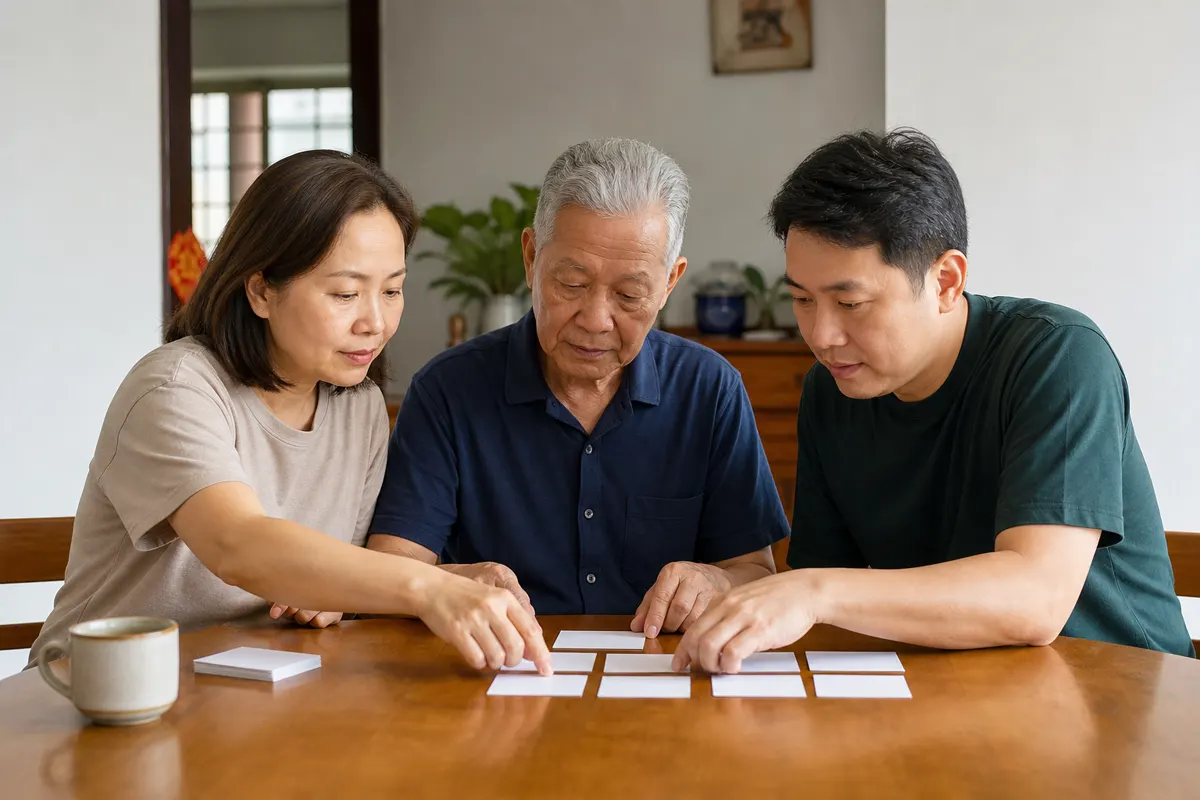
Map one ordinary day

A timeline turns “needs help at home” into a brief another person can understand.

Open the caregiver hours planner

Step 1: write the day from waking to bedtime

Use yesterday or another typical day rather than an ideal schedule. List waking, transfer out of bed, bathroom use, bathing, dressing, breakfast, medicines, movement around the home, lunch, rest, appointments, dinner and bedtime. Add night events separately. For each moment, mark whether the person is independent, needs a prompt, needs someone nearby or needs hands-on assistance.

Step 2: identify the hard-to-cover windows

Circle times when family support is unavailable or one person cannot safely manage alone. Include the minutes before and after a task: preparing the bathroom, cleaning up after a meal and completing a handover all take time. If the need is unpredictable, describe frequency and recent examples without pretending the timing is certain.

Step 3: separate routine support from professional tasks

Put every wound, injection, device, swallowing instruction, therapy activity or symptom-monitoring request in a separate column. Ask the relevant health professional to clarify responsibility. This prevents a clinical task from disappearing inside a broad phrase such as “post-hospital help.”

Step 4: test the smallest workable pattern

Group connected tasks into possible shifts and check who covers gaps. A two-hour morning block may look sufficient until transport, a slow transfer and meal preparation are included. Conversely, a live-in arrangement may add more presence than the routine requires. Use the planner as a discussion aid, not a clinical recommendation or staffing guarantee.

Prepare the request

A care brief that exposes the real work

Share enough to discuss fit without sending sensitive records in the first message.

  • Area and setting: neighbourhood or postcode, home or hospital, and whether the person lives alone.
  • Start and hours: preferred start date, days, shift start and end, and whether nights involve active support.
  • Daily routine: the specific moments requiring prompts, supervision or hands-on help.
  • Mobility: walking aid, transfer method, stairs, recent professional instructions and equipment.
  • Personal care: bathing, dressing, toileting, continence and privacy preferences.
  • Communication: preferred language, hearing or speech considerations and how the person expresses choices.
  • Clinical tasks: list them separately and name what the treating team has said about qualifications.
  • Household fit: pets, smoking rules, food practices, driving expectations and who gives instructions.

Do not send full identity documents, complete medical files or unrelated personal data through an opening WhatsApp message. Begin with the practical brief. Share further information only through an appropriate process and only when it is necessary for evaluating the arrangement.

For the sequence from first enquiry to handover, read how a care enquiry works. That process is a planning model, not a promise that a particular person or start date can be secured.

Verification

Screening is a responsibility, not a badge

Ask for evidence and establish who is responsible for each check.

This page and its enquiry route do not establish that Caregiver Malaysia performs identity, background, employment, reference, qualification or right-to-work checks. Before agreeing to care, the family or contracting party should ask the introducer, the hiring company or the proposed caregiver what has actually been checked, by whom, on what date and whether evidence can be reviewed through a secure process.

Verify identity and the legal right to perform the proposed work. Discuss experience that matches the real duties rather than relying on total years alone. Contact references through details you can independently confirm, and ask about the work performed, reliability, communication and why the engagement ended. If qualifications are needed, identify the appropriate credential and verification source instead of accepting an informal title.

Fit also needs checking. Discuss language, communication style, boundaries, lifting and transfer experience, pets, household rules, transport and willingness to document handovers. Agree duties, hours, fees, overtime, cancellation, privacy, rest, backup and any replacement terms in writing with the contracting party responsible for the caregiver. Use the caregiver screening checklist to structure those questions.

Local logistics

KL and Selangor details can change whether a shift works

A city name is not a usable arrival plan.

Provide the full neighbourhood or postcode before discussing travel. In a condominium, explain visitor registration, lift access, parking or drop-off arrangements and how the caregiver enters when family is absent. For a landed home, mention gates, stairs, pets and any distance between the entrance and the person’s room. Do not infer a physical presence or automatic coverage merely because a guide targets Kuala Lumpur or Selangor.

Shift start and end times should account for safe, reliable transport. Ask the proposed caregiver or their contracting party how they expect to reach the address, particularly for early starts, late finishes and overnight handovers. If accompaniment or driving is requested, clarify who provides the vehicle, what permission and insurance are needed, and whether driving is genuinely part of the agreed role.

Use the Kuala Lumpur caregiver guide for city-specific planning, or browse the location guides to prepare address and access details. These guides support a clearer request; they do not prove current caregiver availability in any neighbourhood.

First shift

Prepare a handover someone can follow

The first shift should not depend on memory or assumptions.

  1. Walk through the routine. Show the agreed bathroom, meal, mobility and rest sequence, including what the person does independently.
  2. Demonstrate only established methods. Provide professional transfer or equipment instructions where relevant; do not improvise a new technique during handover.
  3. Label contacts and responsibility. Give the family contact order, who may change the plan and which health professional should receive non-urgent clinical questions.
  4. Write escalation triggers. Record what requires a family call, professional advice or emergency action. Keep the address and essential information accessible.
  5. Agree the shift note. Decide what to record about meals, fluids, personal care, mobility, mood, events and unresolved concerns without turning observations into diagnoses.
  6. Review after the shift. Ask the person receiving care, caregiver and family what was unclear, rushed or uncomfortable, then update the written routine.
Emergency boundary: Caregiver Malaysia and WhatsApp are not emergency services. For an emergency in Malaysia, call 999. Do not wait for a website or WhatsApp reply. For urgent medical concerns that are not clearly an emergency, follow the treating team’s instructions or contact an appropriate health professional.
Planning checklist

Before you send the first request

A complete brief makes limitations visible early and gives both sides better questions to ask.

Care and timing

  • Ordinary-day timeline completed
  • Hands-on help separated from supervision
  • Clinical tasks listed separately
  • Start date, days and hours written down
  • Night waking and backup needs described

Household and verification

  • Exact area, access and transport context ready
  • Language and personal-care preferences explained
  • Screening responsibilities assigned
  • Written duties and terms requested
  • First-shift handover and emergency order prepared
Send the practical brief

Send a care enquiry

Include the area, preferred start, hours, ordinary daily routine, mobility, personal care, language and every clinical task. Current fit, qualifications, availability and terms still need to be checked before any arrangement is agreed.

Send a detailed WhatsApp request
Updated 2026-08-02. General planning information. Not medical advice, a clinical assessment, an employment offer or a guarantee of caregiver availability.
Ask on WhatsApp