
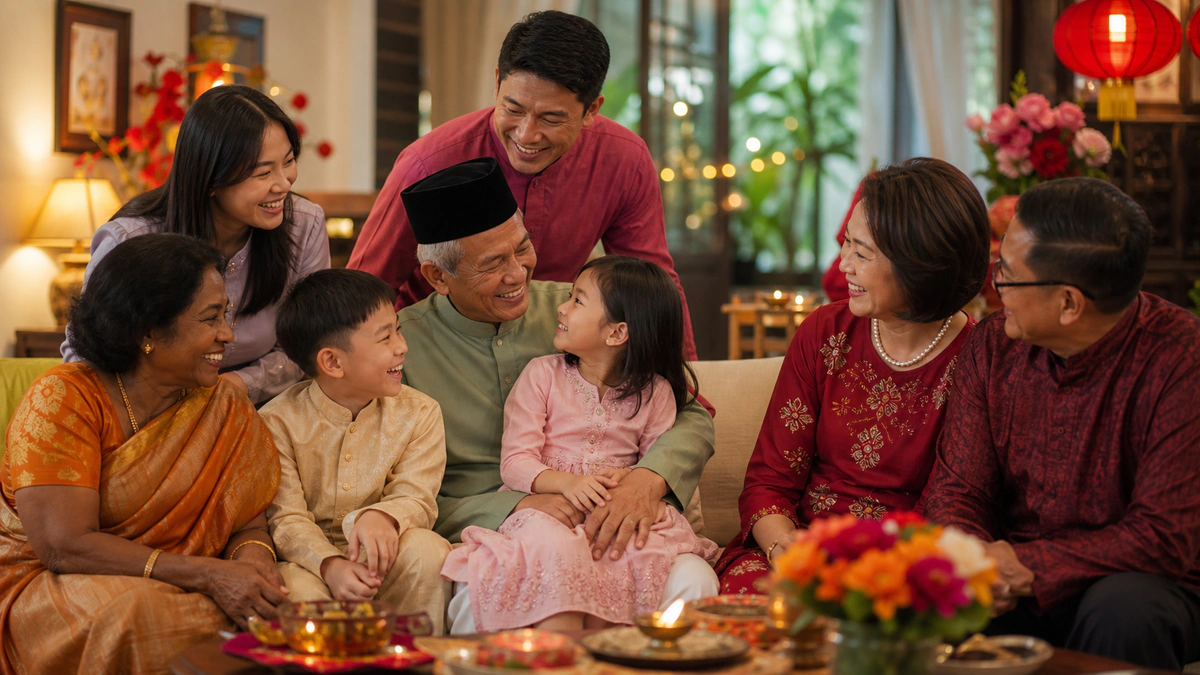
Bringing a frail or memory-affected parent through Chinese New Year works best when you plan around their stamina rather than the calendar’s expectations. A short, well-timed appearance with a quiet room to retreat to usually beats a full evening of noise and long sitting — and letting the shorter version count is the kindest decision you can make for everyone.
The festive pull is real. The whole family balik kampung, the reunion dinner has always been the anchor of the year, and there is a quiet guilt in scaling any of it back. Too many older parents are pushed through a marathon evening only to spend the following week exhausted, disoriented or recovering from a fall. Here is how to keep the joy and reduce the risk.
Travel or host — decide by stamina
The first real decision is whether your parent travels to the gathering or the gathering comes to them. Base it on them, honestly.
- A long car journey balik kampung is tiring and stiffening for a frail body. If it is hours on the road, break it up, plan toilet stops, and accept that the day of travel is a rest day, not a party day.
- If your parent is memory-affected, a strange house can unsettle them badly. Familiar surroundings anchor memory, so hosting a smaller gathering at their own home is sometimes far calmer than taking them elsewhere. If travel is unavoidable, our guidance on caring for someone with dementia covers keeping them oriented away from home.
- When hosting is too much for the household and travelling is too much for your parent, a brief visit at the calmest hour is the middle path — arrive after the loudest part, stay for the part that matters to them, leave before they tire.
Decide early and tell the family early, so nobody is negotiating it in the doorway on the night.
The reunion dinner, realistically
The reunion dinner is where three hazards stack up: noise, long sitting, and stairs or crowding. Handle each.
- Noise and crowds tire a frail parent fast and can tip a memory-affected one into agitation. Seat them slightly out of the loudest zone, near people they know well, with their back to a wall so the room is not swirling behind them.
- Long sitting stiffens joints and raises the risk of a fall when they finally stand. Get them up gently every so often for a short supported walk, and make sure the chair has arms to push up from.
- Stairs and thresholds in an older kampung house or a relative’s home are unfamiliar territory. Walk the route to the toilet with them once, in daylight, so the path is known before they need it at night.
- Yee sang and a crowded table mean reaching and leaning. Plate their food for them rather than leaving them to stretch across the lazy Susan.
Aim for presence, not endurance. Being there for the toss and the first course, then slipping out to rest, is a full and successful visit.
Keep the routine inside the chaos
Festive days dissolve every normal rhythm — meals drift late, naps get skipped, medication times slide. For a frail or memory-affected parent, that drift is often what causes the bad evening, more than any single event.
Hold the anchors steady:
- Medication at the usual times, festive schedule or not. Set a phone alarm so the celebration does not swallow a dose.
- Meals near the normal hour. If the reunion dinner runs very late, give your parent a proper meal earlier and let the banquet be a light, social occasion for them.
- The afternoon rest. Protect the nap. A parent who has rested copes with the evening; one who has been “on” since morning will not.
- A familiar face within reach at all times, so a moment of confusion has someone safe to turn to.
Dietary landmines
The festive table can be difficult for older bodies, and the pressure to indulge is affectionate but relentless.
- Salt and rich food. Bak kwa, waxed meats, sauces and snacks are heavy on salt, which matters for anyone with blood pressure or heart concerns. A small taste for the occasion is one thing; a plate piled by a well-meaning auntie is another.
- Sugar. Pineapple tarts, kuih and sweet drinks add up quickly, which matters for diabetic parents. Portion deliberately.
- Choking risk. Sticky nian gao, nuts and hard sweets are genuine hazards for someone with swallowing difficulty. Cut, soften or steer around them.
- The relentless offering. “Makan more, makan more” is love in this culture, and it is hard to refuse. Give the caregiver or a designated family member quiet permission to manage the plate so your parent is not left declining ten times over.
None of this means your parent eats separate food. It means someone keeps a gentle eye on the plate while everyone else relaxes.
Introducing the caregiver without awkwardness
If a caregiver comes along to the gathering — and for many families a live-in caregiver is simply part of the household now — a little framing removes the awkwardness before it starts.
Introduce them once, early and simply: “This is the person who helps Ma every day.” That is enough. Most relatives accept it immediately, and treating it as ordinary practical support, rather than something to explain or apologise for, sets everyone at ease. Give the caregiver a clear job for the visit — watching the plate, managing the rest breaks, walking your parent to the toilet — so they have a defined role instead of hovering at the edge of the room wondering where to stand. A caregiver with a purpose blends in; one with no brief feels like a spare part, and relatives sense the difference.
The quiet-room escape plan
Every gathering with a frail or memory-affected parent needs one thing agreed in advance: a quiet room and a way to get there.
Pick a bedroom or a calm corner away from the noise, and make it known — to your parent and to the family — that it exists and that using it is fine. Then watch for the early signs that it is time: a parent going quiet and withdrawn, becoming repetitive, rubbing their eyes, or a memory-affected parent starting to look for an exit or asking to “go home” even when they are home. Move them out before overwhelm tips into distress or a fall, not after.
Build a graceful exit line too, so leaving early carries no guilt: “Pa’s had a lovely time, we’re going to get him home to rest.” Nobody sensible argues with that.
The festive season repeats every year, and it will still be there when your parent is having a better season. If getting through it safely means the main family caregiver finally takes a genuine break, planned respite care over the holiday lets someone else hold the line for a few days. A shorter, calmer, well-rested Chinese New Year is not a lesser one — for a frail parent it is very often the happiest one available, and that is worth choosing on purpose.